
Our Work:
Thierry’s Project
DRC
Thierry’s Project
A future without child soldiery
That was the dream of Thierry Shabani. Thierry, a former child soldier, desired a better future for his fellow combatants who, like many young people in South Kivu, endured the challenges of life in the armed groups. After recognizing the possibilities of leaving the armed groups and assisting his fellow child combatants to do the same, he started an organization dedicated specifically to the demobilization and reintegration of child combatants in South Kivu, and convincing armed group leaders to cease the recruitment of children into the fighting groups.
Every Child’s Path Is Different
While goats remain a powerful tool for economic reintegration, we have learned that every child’s path forward is different. Some children want to return to school. Others want to learn a trade, start a small business, or pursue a skill that can provide long-term financial independence. Our program is built around that choice.
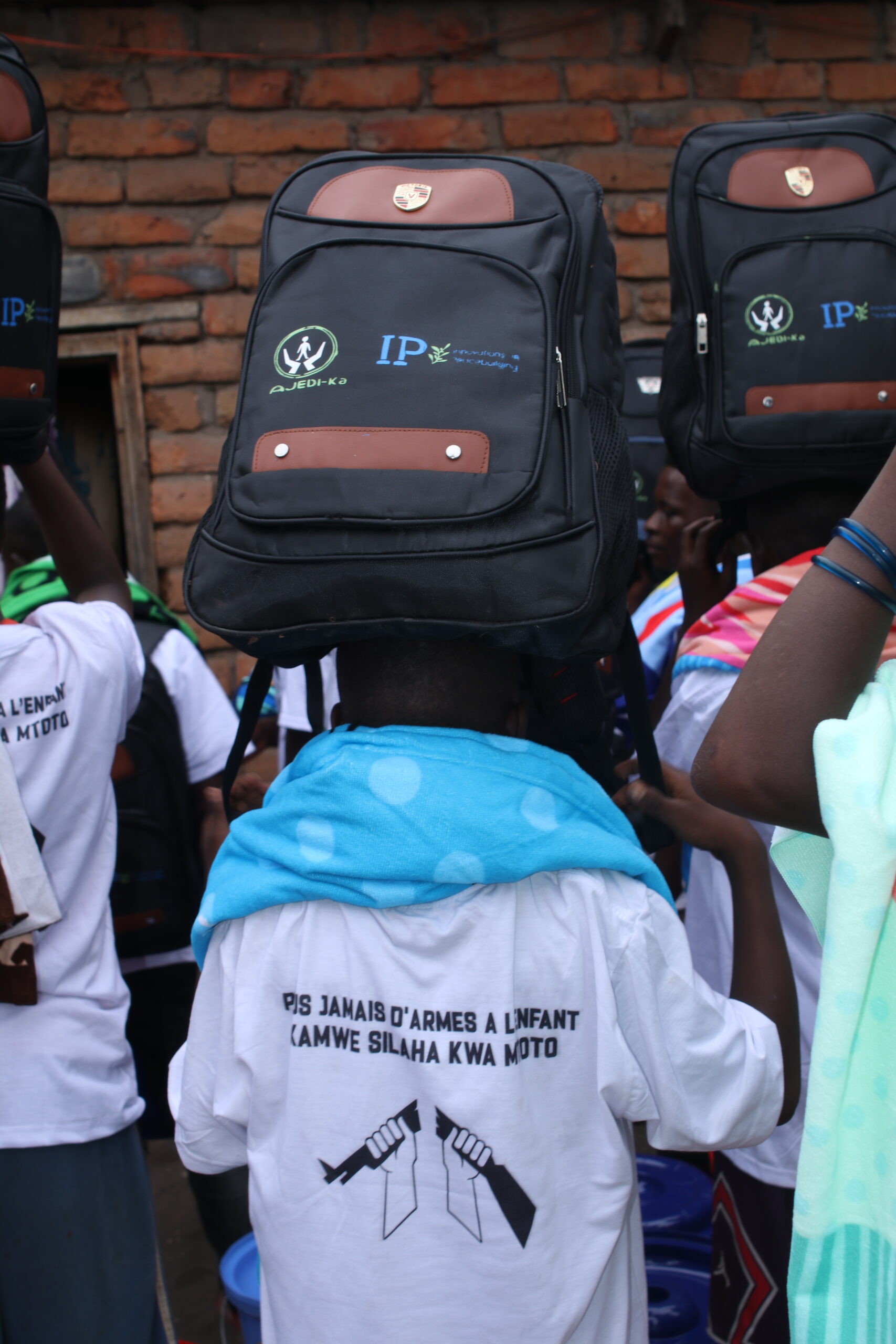
Today, each child works with the AJEDI-Ka team to identify the reintegration pathway that best aligns with their goals and circumstances. For some, that means receiving a goat and building a sustainable source of income. For others, it means enrolling in formal education or participating in vocational training programs. Several girls have chosen to learn dressmaking, gaining valuable skills that can support them and their families for years to come.
This individualized approach reflects a simple belief: lasting reintegration happens when children are empowered to shape their own futures. Among the children demobilized through the program in 2025, 23 chose to receive a goat, 8 returned to formal education, and 3 enrolled in vocational training. While their paths may differ, each option is designed to help children build stability, independence, and hope for the future.
Why goats?
Goats play an important role in the local economy where former child soldiers return post demobilization. In the DRC, approximately three-quarters of the rural population own a goat (often many) and can account for over 70% of a household’s income, according to the International Livestock Research Institute. A goat provides a continued source of income for the recipient and contributes to the community’s well being. A goat represents an investment in the child’s future, allowing them to build wealth, independence and, ultimately, freedom.
We invest in a particular type of goat that often births twins. This allows the recipient to build a herd more quickly and inherently increases its value. The goats can be sold to pay for a sustainable future like educational costs, business investments, or healthcare.

Thierry’s Project:
Children Demobilized
Project location
Number of children from armed groups assisted
Year
Lubarika Center, Lupango, Bulinga and Kagaragara
2016
Makobola II
2017
Lupango
2020
Lubarika
2022
Ake
2024
Lweba
2024
Total

A Partnership begins
A few years after its founding,
Thierry reached out to Innovations in Peacebuilding (IP) during our first journey to the Congo to explore partnerships there. This led to a partnership with IP to demobilize child combatants and fulfill Thierry’s vision of a Democratic Republic of Congo (DRC) where children could just be children, without involvement in fighting groups. After his death in 2021, we launched Thierry’s Project to commemorate his legacy and ensure a path out of child soldiery for all who desire it while reinvigorating community solidarity.
To achieve this, the project raises funds to gift goats to child soldiers once they leave armed groups. For every former child combatant who receives a goat, another vulnerable child in that same village is gifted a goat to promote solidarity, community building, and economic growth.
CONTINUE THIERRY’S LEGACY
Support a total demobilization model.
Your monthly gift makes it possible.
$115
full demobilization kit for one child
(clothing, hygiene products, essential supplies)
$30
supports family reunification for one child
$150
meal stipends for foster families
$575
full demobilization and reintegration per child
